I recently joined the 2.0 Committee of the Institute for Consciousness Research (ICR). This research group, based in Ontario (Canada) aims to raise awareness that science is about to make a monumental breakthrough to unlock real human potential.
For some years, I have been an open government activist, hoping that this model of public management will be implanted worldwide, including in Francophone states. I proposed, in December 2010, with John F. Moore of Government in the Lab, the Open Government and Francophonie project. I firmly believe in the possibilities offered by the open government, based on transparency, participation and collaboration with citizens. However, implementation of open government is hampered by the risk aversion of policy makers, and also by the fact that government leaders are locked in an outdated model of the past.
"The world is in turmoil because our choice of the individuals who should hold the front of is an aberration," said Gopi Krishna. He added: "The day of the acquisitive, aggressive, artful, and ambitious types is almost done."
Collaboration, in the model of open government, cannot yet truly take place, citizens cannot really develop their potential within the framework of this model, if the values and attitudes of policy makers and government officials do not change. Some people believe that the current challenge would consist of persuasion of these locked individuals, which are mostly unable to leach into their closed world some idea coming from the outside. Therefore, for my part, I believe that the challenge lies elsewhere, in the transmutation of the whole personality of individuals.
While I was personally experiencing the risk aversion of government authorities, by the rejection of my ideas (I was told basically that I was wrong and did not fit within the system), something unexpected happened to me, that has completely transformed my life, and that makes me glimpse of the difficulties of implementing the model of open government with new eyes.
I discovered that there is a process that performs a complete review of the human machine to make it better compatible to become the residence of a higher intelligence, primarily of an order higher than the one we normally know. There is a biological process that aims to produce an individual as complete as possible, an innate instinct of life, which is unfolding when the barriers and inhibitions of all kinds have dissolved.
In the human body exists an extremely subtle and complex mechanism located at the bottom of the spine. This mechanism, when it is launched and brought to a rapid activity, strongly modifies the body. It operates in a period of time a marvelous transformation of the nervous system and brain, resulting in the manifestation of a higher type of consciousness, to become the common heritage of Man in the distant future. This mechanism is known as Kundalini.
"It makes one more compassionate, more sensitive, and more perceptive to the distress of others," said Gopi Krishna. "Except for a discerning few, no one cares to ponder the question whether the social and political systems are in accordance with the psychological and biological needs of human beings. Little attention has so far been given to the fact that there must be a collective instinct governing the social and political behavior of the species."
This Luminous Man, wonderfully transformed under the action of a vital force, will probably behave harmoniously in a model of open government. This Luminous Man will even transform the world, beyond our expectations.
That is why I am getting involved at ICR. Because I know now that there is a process that empowers evolution, and I want to contribute to raising awareness about this existing process. I also would like to explore its numerous applications in the various spheres of human activities, including among others, the model of open government.
Aucun message portant le libellé models. Afficher tous les messages
Aucun message portant le libellé models. Afficher tous les messages
06 avril 2012

05 mars 2012
Pedro Prieto-Martin, a vision of enhanced municipal e-participation

It takes courage and strength to dare to dream. Pedro Prietro-Martín is "at the service of his dreams". He followed his heart's desire. "I actually feel that I couldn’t do anything else! Everything seems to fit now so clearly… that I couldn’t help but follow this way. I have to chase my dream."
Pedro is the founding president of the Asociación Ciudades Kyosei (www.ckyosei.org), a civic organization whose aim is to foster civic engagement by means of ICT technologies. Founded in 2006, it is the oldest Spanish NGO devoted to the promotion of (e)Participation. Pedro is responsible for creating a virtual system for municipal citizen participation, suited for developed, as well as developing countries.
He created a model that provides citizens and politicians tools promoting a stronger citizen incidence at the municipal level, which is where the interaction representative-represented is easier and closer. Pedro realized there is a need for new tools and methods which enhance the ability of citizens and politicians to work together in solving their daily problems, and thus promote a renewal of politics. A true democracy needs to be guided by an intense and constant dialogue between politicians and the citizens.
Pedro saw he needed to move further from the dualism expressed in the "top-down"/ "bottom-up" opposition, and go in the direction of a "kaleidoscopic governance", with multiple actors and stakeholders involved. Pedro realized that the requirements needed to support participation... just started to converge.
Read more about Pedro
―Creation of Kyopol system http://edgeryders.ppa.coe.int/share-your-ryde/mission_case/creation-kyopol-system-aka-symbiotic-city-internet-catalyst-civic-engag
Michel Fillippi, a connected philosopher observes systems and models new ones

Michel Filippi describes himself as an experimental philosopher. He has a strong presence in social media and applies his philosophical discoveries to various fields: business strategy, product design, e-learning, innovation and training. He practices a philosophy that relates to generic philosophy, by no means the science of science, not the ultimate knowledge about all knowledge.
Michel sees philosophy as a good companion, allowing to look into situations and systems, a way to organize what we perceive in a different way, through an exploration of the human being. Everywhere he goes, Michel is a good companion: he discusses with many and helps people think.
He creates models of situations, operations and relationships. His models, accurate examinations of any moment, show that any actor is involved in several situations and therefore simultaneously holds different roles. Models produce a variety of knowledge, explanations, forms, allow to test their existence in a continuous manner.
For Michel, the problem of leadership is related to the definition that we give it and our definition of the world, ie the first individual to which this definition refers. Michel believes open government needs to develop a model of the world, at least describe it, have it explored. Innovation should be guarded against any predetermination. Open access requires the design of new tools for processing such data, because all data processing tools require prior specifications. One of his models predicted that the more new data is available, the more ordinary actions, having already taken place, are being justified.
Read more about Michel
― Comment je suis devenu philosophe http://edgeryders.ppa.coe.int/share-your-ryde/mission_case/comment-je-suis-devenu-philosophe
― Un philosophe a-t-il son mot à dire sur l'open government? http://edgeryders.ppa.coe.int/we-people/mission_case/un-philosophe-t-il-son-mot-%C3%A0-dire-sur-lopen-government
― "Data". Que sont les data dans un projet de gouvernement ouvert? http://edgeryders.ppa.coe.int/spotlight-open-government/mission_case/data-que-sont-les-data-dans-un-projet-de-gouvernement-ouvert
― Des hommes et de notre civilisation http://edgeryders.ppa.coe.int/shine-some-light/mission_case/des-hommes-et-de-notre-civilisation
12 janvier 2012
Where are the current challenges to open government?
This post is an answer John F Moore's questions, from Government in the Lab,
No, open government isn't progressing as much as I would like to. To such an extent that I worry if it isn't just any fad.
There are several factors that hinder the development of this new trend in public management. A couple of months ago, Kieran Harrop, from British Colombia, wrote a post about 'Risk Aversion', being one of the greatest risks. I quite agree with him. 'Risk aversion and fear of the unknown thwarts public institutions from realizing the benefits of open government.' She Kieran's post: http://govinthelab.com/open-government-risk-aversion-one-of-government%E2%80%99s-greatest-risks/
Mark Garriga from Spain speaks of 'integrity' in his Edgeryders mission report, Desde Web Analytics hasta OpenData // From WebAnalytics to OpenData http://edgeryders.ppa.coe.int/share-your-ryde/mission_case/desde-web-analytics-hasta-opendata-webanalytics-opendata
In order to have more integrity, we need to define new model of leadership based on a new model of 'luminous' Human being. Communities of philosophers, like Michel Filippi from France, can help us to define these new models.
There are still mountains of work to do. Fear is our greatest enemy. Poverty is another (lack of contracts and jobs in this area).
There are people who have visions of open government. There are people who dream of that, and continue to hope that open government will become a main trend of public management. Gather them into collaborative teams, highlight their visions, and create a maximum of leaders. I believe that this is one way to drive change. http://edgeryders.ppa.coe.int/shine-some-light/mission_case/how-can-we-drive-change
Help each opengov activist to define his/her vision. This is what I can help to do right now, via Edgeryders.
I wish I had clearer answers. But that's all I see for now. Each month, by talking to people from my network and sharing with them about these issues, the path becomes clearer in my mind.
A comprehensive strategy, I do not know if this is too ambitious. We often criticize the lack of vision of political leaders. John, you often talk about 'fearless leaders'. Do these leaders exist? Who are they? Where are they? Someone, somewhere, has to develop a global vision of open government, and share it with the highest spheres of power. Is there an institution to fund these efforts? I believe that as a community, we can succeed in defining visions, and bring all of these visions into a bigger scope, all-encompassing vision.
When I get to see things very clearly in my mind, at this precise point of space and time, the seed of intention gets planted in my soul, and the order for materialization of my thoughts is placed. I do not know how it happens. I just need to believe. This is how the human mind works, through visualisation, intent, and hope. We are creators. Citizens, they should be co-creators with their government. I know it would be a good thing. How to materialize it? I am still looking for answers...
'What is the biggest challenge to open government success?
Is open government progressing as you expected?
Where are the current challenges?'
No, open government isn't progressing as much as I would like to. To such an extent that I worry if it isn't just any fad.
There are several factors that hinder the development of this new trend in public management. A couple of months ago, Kieran Harrop, from British Colombia, wrote a post about 'Risk Aversion', being one of the greatest risks. I quite agree with him. 'Risk aversion and fear of the unknown thwarts public institutions from realizing the benefits of open government.' She Kieran's post: http://govinthelab.com/open-government-risk-aversion-one-of-government%E2%80%99s-greatest-risks/
Mark Garriga from Spain speaks of 'integrity' in his Edgeryders mission report, Desde Web Analytics hasta OpenData // From WebAnalytics to OpenData http://edgeryders.ppa.coe.int/share-your-ryde/mission_case/desde-web-analytics-hasta-opendata-webanalytics-opendata
In order to have more integrity, we need to define new model of leadership based on a new model of 'luminous' Human being. Communities of philosophers, like Michel Filippi from France, can help us to define these new models.
There are still mountains of work to do. Fear is our greatest enemy. Poverty is another (lack of contracts and jobs in this area).
There are people who have visions of open government. There are people who dream of that, and continue to hope that open government will become a main trend of public management. Gather them into collaborative teams, highlight their visions, and create a maximum of leaders. I believe that this is one way to drive change. http://edgeryders.ppa.coe.int/shine-some-light/mission_case/how-can-we-drive-change
Help each opengov activist to define his/her vision. This is what I can help to do right now, via Edgeryders.
I wish I had clearer answers. But that's all I see for now. Each month, by talking to people from my network and sharing with them about these issues, the path becomes clearer in my mind.
A comprehensive strategy, I do not know if this is too ambitious. We often criticize the lack of vision of political leaders. John, you often talk about 'fearless leaders'. Do these leaders exist? Who are they? Where are they? Someone, somewhere, has to develop a global vision of open government, and share it with the highest spheres of power. Is there an institution to fund these efforts? I believe that as a community, we can succeed in defining visions, and bring all of these visions into a bigger scope, all-encompassing vision.
When I get to see things very clearly in my mind, at this precise point of space and time, the seed of intention gets planted in my soul, and the order for materialization of my thoughts is placed. I do not know how it happens. I just need to believe. This is how the human mind works, through visualisation, intent, and hope. We are creators. Citizens, they should be co-creators with their government. I know it would be a good thing. How to materialize it? I am still looking for answers...
05 janvier 2012
How can we drive change?
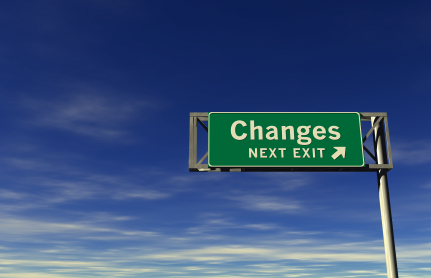 A few days ago, Johh F Moore, from Government in the Lab, asked me this question: “HOW CAN WE DRIVE CHANGE?“.
 (That's a big question, John!)
Interestingly, at the same time, I was having a discussion at Edgeryders with the French experimental philosopher Michel Fillippi. He answered more or less the same thing I told John, but he used different words, he used philosopher’s words.
My answer to John --- an intuition --- was to highlight people (for instance, Edgeryders participants), and have them emerge as leaders.
Michel Fillippi's answer is to have the most numerous leaders emerge, and he explained why.
Here is what Michel Filippi told me, via the following Edgeryders status, http://edgeryders.ppa.coe.int/statuses/552):
 (My translation) “We should seek for various possibilities, different leaderships. Why? The first reason behind (this method) is because it’s systemic. Every leader is to create a world, a system (as defined in the General Systems Theory). A system grows and becomes more unstable. Any system involves a becoming. Several competing systems allow individuals to engage in various futures and this prevents a system to seek its maximum state, therefore, prevents it to reach a maximum instability. Individuals must be taught not to seek unique solutions, not to aim to a state of perfection. We should also know that all creation, any system design, generates violence because a state of energy is being released, or the convening of power to make it work. Nothing is done in calmness, quietness. Therefore, (efforts should focus on) having the most numerous leaders emerge, while preventing one leader in particular from becoming dominant. (When in a process) of structuring, (it is preferable) to avoid convergence and develop even opposed themes. I think – as I have faith in philosophy -, that the debate on "Which people? Which kills, abilities, and so on?" "How the Real in which humans exist?", "What worlds are better?" What does everybody hate?" "What is a civilization?","What does 'being civilized' mean? ","For what, for whom, for what world are we willing to suffer, to die ", these are classics philosophical questions, but they are worth to be re-asked, and be explored again.“
Michel Fillippi continues:
“Yesterday, I visited an exhibition about Buckminster Fuller. There, I read a sentence in which I recognized myself, and I also recognized in it one of these blockages that you mentioned, Lyne, regarding the model. As the model is not externalized, it is not yet perceived as (being in the process) of building, therefore, the (implementing of) change is difficult. We must come to understand that our opinions, beliefs, desires, and perhaps even wishes that we consider to be the most real - a truth that comes from the core of being, the substance of our bodies, our essence itself -, are only constructions that we have absorbed without criticism, without us knowing it could become otherwise.
As for convergence, is a problem in innovation design. A trend of engineers and administrators is to converge as quickly as possible. It is a cognitive model that has been "swallowed" as truth, and indisputable as a procedure based on algorithms, mathematical. However, (it is better) at all costs, to converge as late as possible. Specifically, a design method such as C-K designed at by The School of Mines of Paris (Hatchuel), fight against convergence by using the mathematical notion of "forcing".”
In a few days, on January 9th, Edgeryders will launch its third campaign 'We the people'. One of the four missions of this campaign will focus on open government and open data. A discussion on leadership models and open government models will certainly be helpful to many of us. You are invited to participate to the Edgeryders new campaign, and in the meantime, you can also give a hand to John F Moore, by continuing the discussion on "How to drive change". http://edgeryders.ppa.coe.int/shine-some-light/mission_case/how-can-we-drive-change
30 novembre 2011
ALL HANDS ON DECK! Call to action: Edgeryders
 Do you know that on LinkedIn, some Francophones have a discussion about open government issues?
 There is no shadow of an open government to the horizon, but these issues are floating around in people's minds, and are discussed here and there.
What can we do now?
Yesterday, Thanh Xuan T. wrote:
(translation) "How the French government, and even the European governments, operate prevents the application of open government, and also the fear of losing a little more power (both legislative and executive) and overall control over the people. Democracy often goes backwards, or serves some obscure purposes, only to result in more control and censorship "discreetly" practiced by the government. Regarding the question of political will: it is obvious that this type of "management" far exceeds the ability of our political leaders, who more consistently care about maintaining their elected mandate, than have a genuine interest in citizens and their nation. Therefore, open government becomes a paradox: a rather unpopular democratic method, not welcomed by officials, even in the land of liberty (especially by the current ruling party)." (Ref. Is France to soon have an open government policy?Last week, at Edgeryders, it was discussed, with philosopher Michel Filippi, how to go about defining models of leadership and open government. I explained yesterday (see this post) that we covered risk aversion and locking processes.
Edgeryders is a bridge between government authorities and citizens: what a great opportunity to help them understand what are our concerns! Government officials are listening, via this platform. Let's speak up!
The time has come for citizens from European countries - and other nations - to mobilize in an unprecedented move. Students, open government apostles, culture hackers, worldview hitchhikers, open scholars, geeks, artists, scientists, philosophers, thought leaders, change agents, social alchemists, activists, advocates, communicators, lobbyists, writers, thinkers, visionaries, etc., people from all spheres of society, ALL HANDS ON DECK! Let's gather at Edgeryders!
1) Sign up on the platform http://edgeryders.ppa.coe.int/
2) Upload your (real) pic
3) Complete your profile
4) Do the 'Share your ryde' mission (TELL YOUR STORY. What matters to you? Do you care about open government? Why?)
Here are examples of cool stories: do you know the Kyopol system? (mission by pedro.prieto-martin); Michel Filippi's mission; Neal Gorenflo's mission; Lyne Robichaud's mission, including discussions with philosopher Michel Filippi.And soon, we'll start doing small packets of research together, we'll play Edgeryders missions and campaigns. Stay tuned.
29 novembre 2011
Risk aversion, locking processes, and leadership models
This year, in spite of myself, I became familiar with the "risk aversion" concept. I found out, the tough way, that government officials and managers deploy torrents of creativity to say NO.
According to Kieran Harrop, Director, Business Engagement, Strategic Initiatives, Government of British Colombia (a Canadian province), "open government risk aversion is one of government's greatest risks".
A quick environmental scan reveals that the majority of governments in Canada (federal, provincial, territorial and municipal), and indeed the world, are resisting the movement to open government, wrote Kieran Harrop at Government in the Lab.
Last week, at Edgeryders, a discussion about open government models with experimental philosopher Michel Filippi opened the door to explore behaviors and factors that lead individuals (such as government officials and managers) in a locking process. In French, Michel Filippi calls it «verrouillage».
Another problem is that MPs often end up with a job with no meaningful responsibilities. If there can be a way to treat MPs as somebodies, they will no longer be content to be nobodies. And they might in turn treat citizens as somebodies. If citizens are appreciated and respected, it could lead to a constructive climate of collaboration, in an open government model.
There are brave attempts to reverse these dynamics, but it is not enough. I am afraid it will take much more than that. Various reforms depend on people in the higher spheres being willing to buck the status quo. Can we come across the sort of officials likely to rock the boat, challenge "locking processes", and propose new leadership models?
Can Edgeryders participants explore together, and gather information about risk aversion and locking processes? I believe they can!
According to Kieran Harrop, Director, Business Engagement, Strategic Initiatives, Government of British Colombia (a Canadian province), "open government risk aversion is one of government's greatest risks".
A quick environmental scan reveals that the majority of governments in Canada (federal, provincial, territorial and municipal), and indeed the world, are resisting the movement to open government, wrote Kieran Harrop at Government in the Lab.
Last week, at Edgeryders, a discussion about open government models with experimental philosopher Michel Filippi opened the door to explore behaviors and factors that lead individuals (such as government officials and managers) in a locking process. In French, Michel Filippi calls it «verrouillage».
"Someone who does not change its mode of action should first be referred by a model. Here, for example, one could refer to the "cognitive locking process". Cognitive scientists have shown that when a player is locked into a spot, nothing external to the situation can enter its cognitive system. Therefore, a government officer that does not change his leadership style could be locked onto a task. Now, if we agree, this model has taught us something more about the situation described, than what was known previously. This is an example of beginning of exploration that could be undertaken (at Edgeryders).We hear more and more, that government institution have become largely irrelevant and increasingly impotent. I came to think that it is not sufficient for government officials and managers to understand the benefits of open government. They must also change their leadership model. How can there be transparency if corruption is slyly deeply infiltrated in a government, or if a culture of silence weighs on all shoulders? How can we claim to participation, if the government people are not listening, are disconnected from themselves and from citizens? How can we hope to cooperate when some officials are so arrogant and condescending, have the angry switch permanently on, that they make us want to escape by running in the opposite direction? It's hard to get away from a certain rage-against-the-darkness feeling. Government institutions are caught in a spiral, the more degraded they becomes, the harder it is to rally people to its defence.
By starting to collect information on what is "irritating", we draw the first step of a design process. We can ask ourselves: What do I know about this particular object that I have designated as "irritating"? Then, we can go one step further by asking what knowledge irritants have, what they are, how are they used, on which "objects", etc. When we increase the creation of knowledge, we have an early model", explained Michel Filippi.
Another problem is that MPs often end up with a job with no meaningful responsibilities. If there can be a way to treat MPs as somebodies, they will no longer be content to be nobodies. And they might in turn treat citizens as somebodies. If citizens are appreciated and respected, it could lead to a constructive climate of collaboration, in an open government model.
There are brave attempts to reverse these dynamics, but it is not enough. I am afraid it will take much more than that. Various reforms depend on people in the higher spheres being willing to buck the status quo. Can we come across the sort of officials likely to rock the boat, challenge "locking processes", and propose new leadership models?
Can Edgeryders participants explore together, and gather information about risk aversion and locking processes? I believe they can!
Opengov dreams that do not die out (Edgeryders)
Two weeks ago, I traveled to Strasbourg, France, to meet the Edgeryders team, a new project run by the Social Cohesion Research and Development Division of the Council of Europe, with financial support from the European Commission. I am very pleased and honored to be part of this team.
I'm not a European, but my vision extends to Francophonie, and beyond.
I 'shared my ryde' (I told my personal and professional story) at Edgeryders, since it is through the eyes of citizens that these government agencies wish to understand what is important to European youth (and not so young people as well). From this information, the Council of Europe will seek solutions to help youth overcome adversity (particularly with regard to unemployment). Thus, this is how should be an open government: listen, show a genuine interest in what is proposed by the citizens, and use this information (the creation of knowledge) to improve public policy.
At Edgeryders, I talked about my open government dream, because this is what has concerned me for several years, enough to have spent much of my time and my energy to try to achieve this ideal. To date, no Francophone country in the world truly adopted an open government policy. None have succeeded in applying the fundamentals of this philosophy (transparency, participation and collaboration).
My opengov dreams are still alive, although what I proposed, the Open Government and Francophonie project, has not come to life yet. When something inside drives you with such intensity, nothing and no one, can destroy it. While government authorities have rejected the ideas I proposed, these ideas were not destroyed. They continue to exist somewhere in me, and in other people as well.
At Edgeryders, I shared the details of a project that does not exist yet. Maybe it will never exist at one point. It is not real for now, but it has gravitated inside me, and in other people, for more than a year.
These ideas are not just mine, they belong to the community.
By sharing my story at Edgeryders, I met on my way a philosopher. A special type of philosopher: an experimental philosopher. Last week, with Michel Filippi, a discussion took shape, about leadership and open government models. This kind of discussion has never taken place yet in the Francophone world (and probably beyond): I was happy to see it take shape in a place like Edgeryders.
Michel Filippi also shared his story at Edgeryders. Thus, I learned that he is good at creating relationships between things and people, he excels at making models. He pointed to an article by Karl Dubost, dating from 1999, entitled "Semantic proximitiy":
I invite those who have open government dreams, like me, and also those who are concerned about the future of our society, to share their story at Edgeryders, and join in discussions, missions, and campaigns, as we weave together valuable information knowledge over the upcoming months.
I'm not a European, but my vision extends to Francophonie, and beyond.
I 'shared my ryde' (I told my personal and professional story) at Edgeryders, since it is through the eyes of citizens that these government agencies wish to understand what is important to European youth (and not so young people as well). From this information, the Council of Europe will seek solutions to help youth overcome adversity (particularly with regard to unemployment). Thus, this is how should be an open government: listen, show a genuine interest in what is proposed by the citizens, and use this information (the creation of knowledge) to improve public policy.
At Edgeryders, I talked about my open government dream, because this is what has concerned me for several years, enough to have spent much of my time and my energy to try to achieve this ideal. To date, no Francophone country in the world truly adopted an open government policy. None have succeeded in applying the fundamentals of this philosophy (transparency, participation and collaboration).
My opengov dreams are still alive, although what I proposed, the Open Government and Francophonie project, has not come to life yet. When something inside drives you with such intensity, nothing and no one, can destroy it. While government authorities have rejected the ideas I proposed, these ideas were not destroyed. They continue to exist somewhere in me, and in other people as well.
At Edgeryders, I shared the details of a project that does not exist yet. Maybe it will never exist at one point. It is not real for now, but it has gravitated inside me, and in other people, for more than a year.
These ideas are not just mine, they belong to the community.
By sharing my story at Edgeryders, I met on my way a philosopher. A special type of philosopher: an experimental philosopher. Last week, with Michel Filippi, a discussion took shape, about leadership and open government models. This kind of discussion has never taken place yet in the Francophone world (and probably beyond): I was happy to see it take shape in a place like Edgeryders.
Michel Filippi also shared his story at Edgeryders. Thus, I learned that he is good at creating relationships between things and people, he excels at making models. He pointed to an article by Karl Dubost, dating from 1999, entitled "Semantic proximitiy":
"Let the form of action emerge, rather than model the action of the form."This sentence has been floating in my mind for several days. I was wondering how I would shape a collective Edgeryders mission in connection with open government issues. This sentence comes to me at the perfect timing, as a gift. Thanks Michel Filippi!
I invite those who have open government dreams, like me, and also those who are concerned about the future of our society, to share their story at Edgeryders, and join in discussions, missions, and campaigns, as we weave together valuable information knowledge over the upcoming months.
S'abonner à :
Messages (Atom)


