Dans une de mes discussions avec le philosophe Michel Filippi, nous parlions de transhumanisme, et du fait que peu de gens acceptent de se poser la question de la refondation de l'humain à part Ray Kurzweil et son projet de transhumanisme. J'ai remarqué que le transhumanisme a recu la critique "une des idees les plus dangereuses".
Les "idées dangereuses" consistent peut-être en des idées rejetées par des scientifiques et décideurs emprisonnés dans une perception séparée, engendrée par l'égoïsme et d'autres comportements non altruistes.
De nombreux mystiques ont néanmoins compris, depuis longtemps (par exemple, Bouddha et Jésus), que se mettre en réseaux, faire appel à l'intelligence collective, conduirait probablement à de meilleures réussites.
Voici une très belle prédiction de Baird T. Spalding, qui peut s'appliquer au phénomène de bouillonnement d'activité accrue dans les médias sociaux (mais qui faisait cependant référence à l'Homme kundalinien): "On ne tardera pas à découvrir que l'unité des mobiles et des efforts constitue le plus puissant moyen d'atteindre le but désiré. Alors les innombrables individus, qui dispersent leurs pensées dans toutes les directions et tirent à hue et à dia, ne penseront plus que comme un seul et les hommes connaîtront la signification d'un effort vigoureux, continue, et commun. Quand ils seront mus par une volonté unique, toutes choses leur seront possibles."
Et encore:
"Quand l'homme s'est dérobé à ce plan de coopération parfaite, il a déséquilibré le monde et a provoqué la destruction. La pensée parfaite d'amour, coopérant dans le coeur des hommes avec l'équilibre et le pouvoir, maintient la stabilité de la terre. Quand les hommes dispersent cette force en pensées de péché et de luxure, le monde fut tellement désorienté que l'humanité détruisit presque tout le fruit de ses travaux."
Par conséquent, les artistes --- qui sont des créateurs, qui ont la plupart du temps recours à l'inspiration (leur provenant d'une force située à l'intérieur d'eux et étant plus grande qu'eux) --- contribuent effectivement à pousser les humains vers de plus hauts sommets. Mais ils n'ont pas la connaissance, pour la plupart d'entre eux, de plus grandes possibilités pour l'humain.
Il est des hommes qui suivent avec persévérance un véritable idéal de vie (le plan de la nature). Ceux-là ont fait de grands progrès. S'il souhaite éviter la déchéance (l'histoire nous démontre des cas de chute d'empires, comme l'empire romain), le monde sera bientôt obligé d'accepter les leçons de ces hommes, dont la vie laisse présager les possibilités latentes de tous les humains.
Aucun message portant le libellé Michel Filippi. Afficher tous les messages
Aucun message portant le libellé Michel Filippi. Afficher tous les messages
19 avril 2012

05 mars 2012
Michel Fillippi, a connected philosopher observes systems and models new ones

Michel Filippi describes himself as an experimental philosopher. He has a strong presence in social media and applies his philosophical discoveries to various fields: business strategy, product design, e-learning, innovation and training. He practices a philosophy that relates to generic philosophy, by no means the science of science, not the ultimate knowledge about all knowledge.
Michel sees philosophy as a good companion, allowing to look into situations and systems, a way to organize what we perceive in a different way, through an exploration of the human being. Everywhere he goes, Michel is a good companion: he discusses with many and helps people think.
He creates models of situations, operations and relationships. His models, accurate examinations of any moment, show that any actor is involved in several situations and therefore simultaneously holds different roles. Models produce a variety of knowledge, explanations, forms, allow to test their existence in a continuous manner.
For Michel, the problem of leadership is related to the definition that we give it and our definition of the world, ie the first individual to which this definition refers. Michel believes open government needs to develop a model of the world, at least describe it, have it explored. Innovation should be guarded against any predetermination. Open access requires the design of new tools for processing such data, because all data processing tools require prior specifications. One of his models predicted that the more new data is available, the more ordinary actions, having already taken place, are being justified.
Read more about Michel
― Comment je suis devenu philosophe http://edgeryders.ppa.coe.int/share-your-ryde/mission_case/comment-je-suis-devenu-philosophe
― Un philosophe a-t-il son mot à dire sur l'open government? http://edgeryders.ppa.coe.int/we-people/mission_case/un-philosophe-t-il-son-mot-%C3%A0-dire-sur-lopen-government
― "Data". Que sont les data dans un projet de gouvernement ouvert? http://edgeryders.ppa.coe.int/spotlight-open-government/mission_case/data-que-sont-les-data-dans-un-projet-de-gouvernement-ouvert
― Des hommes et de notre civilisation http://edgeryders.ppa.coe.int/shine-some-light/mission_case/des-hommes-et-de-notre-civilisation
12 janvier 2012
Where are the current challenges to open government?
This post is an answer John F Moore's questions, from Government in the Lab,
No, open government isn't progressing as much as I would like to. To such an extent that I worry if it isn't just any fad.
There are several factors that hinder the development of this new trend in public management. A couple of months ago, Kieran Harrop, from British Colombia, wrote a post about 'Risk Aversion', being one of the greatest risks. I quite agree with him. 'Risk aversion and fear of the unknown thwarts public institutions from realizing the benefits of open government.' She Kieran's post: http://govinthelab.com/open-government-risk-aversion-one-of-government%E2%80%99s-greatest-risks/
Mark Garriga from Spain speaks of 'integrity' in his Edgeryders mission report, Desde Web Analytics hasta OpenData // From WebAnalytics to OpenData http://edgeryders.ppa.coe.int/share-your-ryde/mission_case/desde-web-analytics-hasta-opendata-webanalytics-opendata
In order to have more integrity, we need to define new model of leadership based on a new model of 'luminous' Human being. Communities of philosophers, like Michel Filippi from France, can help us to define these new models.
There are still mountains of work to do. Fear is our greatest enemy. Poverty is another (lack of contracts and jobs in this area).
There are people who have visions of open government. There are people who dream of that, and continue to hope that open government will become a main trend of public management. Gather them into collaborative teams, highlight their visions, and create a maximum of leaders. I believe that this is one way to drive change. http://edgeryders.ppa.coe.int/shine-some-light/mission_case/how-can-we-drive-change
Help each opengov activist to define his/her vision. This is what I can help to do right now, via Edgeryders.
I wish I had clearer answers. But that's all I see for now. Each month, by talking to people from my network and sharing with them about these issues, the path becomes clearer in my mind.
A comprehensive strategy, I do not know if this is too ambitious. We often criticize the lack of vision of political leaders. John, you often talk about 'fearless leaders'. Do these leaders exist? Who are they? Where are they? Someone, somewhere, has to develop a global vision of open government, and share it with the highest spheres of power. Is there an institution to fund these efforts? I believe that as a community, we can succeed in defining visions, and bring all of these visions into a bigger scope, all-encompassing vision.
When I get to see things very clearly in my mind, at this precise point of space and time, the seed of intention gets planted in my soul, and the order for materialization of my thoughts is placed. I do not know how it happens. I just need to believe. This is how the human mind works, through visualisation, intent, and hope. We are creators. Citizens, they should be co-creators with their government. I know it would be a good thing. How to materialize it? I am still looking for answers...
'What is the biggest challenge to open government success?
Is open government progressing as you expected?
Where are the current challenges?'
No, open government isn't progressing as much as I would like to. To such an extent that I worry if it isn't just any fad.
There are several factors that hinder the development of this new trend in public management. A couple of months ago, Kieran Harrop, from British Colombia, wrote a post about 'Risk Aversion', being one of the greatest risks. I quite agree with him. 'Risk aversion and fear of the unknown thwarts public institutions from realizing the benefits of open government.' She Kieran's post: http://govinthelab.com/open-government-risk-aversion-one-of-government%E2%80%99s-greatest-risks/
Mark Garriga from Spain speaks of 'integrity' in his Edgeryders mission report, Desde Web Analytics hasta OpenData // From WebAnalytics to OpenData http://edgeryders.ppa.coe.int/share-your-ryde/mission_case/desde-web-analytics-hasta-opendata-webanalytics-opendata
In order to have more integrity, we need to define new model of leadership based on a new model of 'luminous' Human being. Communities of philosophers, like Michel Filippi from France, can help us to define these new models.
There are still mountains of work to do. Fear is our greatest enemy. Poverty is another (lack of contracts and jobs in this area).
There are people who have visions of open government. There are people who dream of that, and continue to hope that open government will become a main trend of public management. Gather them into collaborative teams, highlight their visions, and create a maximum of leaders. I believe that this is one way to drive change. http://edgeryders.ppa.coe.int/shine-some-light/mission_case/how-can-we-drive-change
Help each opengov activist to define his/her vision. This is what I can help to do right now, via Edgeryders.
I wish I had clearer answers. But that's all I see for now. Each month, by talking to people from my network and sharing with them about these issues, the path becomes clearer in my mind.
A comprehensive strategy, I do not know if this is too ambitious. We often criticize the lack of vision of political leaders. John, you often talk about 'fearless leaders'. Do these leaders exist? Who are they? Where are they? Someone, somewhere, has to develop a global vision of open government, and share it with the highest spheres of power. Is there an institution to fund these efforts? I believe that as a community, we can succeed in defining visions, and bring all of these visions into a bigger scope, all-encompassing vision.
When I get to see things very clearly in my mind, at this precise point of space and time, the seed of intention gets planted in my soul, and the order for materialization of my thoughts is placed. I do not know how it happens. I just need to believe. This is how the human mind works, through visualisation, intent, and hope. We are creators. Citizens, they should be co-creators with their government. I know it would be a good thing. How to materialize it? I am still looking for answers...
07 janvier 2012
What is a leader?
 I continue sharing my thoughts about 'HOW TO DRIVE CHANGE'. Over the Holidays, Michel Fillippi and I discussed at Edgeryders about allowing as many leaders to emerge.
What is a leader? How can I identify a leader? What can help me spot leaders? What can help me improve my leadership skills? What are the new models of leadership?
While I pondered these questions, I received a video from Lolly Daskal. It allowed me to see how she puts into practice that she advocates, a heart based model of leadership. She celebrated the New Year with a blog post and a video highlighting all the members of the Lead from within community. She include me in the video (I'm honored). http://t.co/A8D0WXaW
[You can read all transcripts of Lead from within chats, on Twitter every Tuesday night: http://www.lollydaskal.com/leadfromwithin/]
This reference might be dating a little, but it's good organizational strategies for new leadership: Cufaude, J. B. (2001). Telling a new leadership story. Association Management.
Also, Joseph Kennedy’s 2010 article, Empowering Future Organizational Leaders for the 21st Century highlighted Mark Popovich‘s High Performance Structures, which encourages organisations to set aside bureaucracies and embrace flexibility and innovation at all levels. Kennedy, J. W. (2010). Empowering future organizational leaders for the 21st century. The International Business & Economics Research Journal.
According to there references, leaders are...
- CHAOS EMBRACERS. Most humans are conditioned for order, control and predictability. This blinds many from the truth: chaos is healthy, creativity, opportunity. Chaos is life reordering itself. "New" leaders are creators of chaos, just as much as originators of order. They engage the optimists as well as the pessimists. By stirring the pot, leaders stimulate possible breakthroughs in creativity and innovation.
- WOW! INJECTORS. Leaders create or champion projects that add value and make a difference. When people are involved in these types of projects, they feel rejuvenated, personally challenged. They feel they can accomplish something useful, and they believe that their input matters.
- FACILITATORS. Leaders ask the obvious and even the un-askable questions. They clarify roles of each teammate, responsibilities, and expectations. They provide closure around decisions. Facilitator are skilled at helping everyone in a group express their leadership qualities. They help things go smoothly without imposing their own ideas upon everyone else. Negotiators are skilled facilitators. These are leaders committed to serve others as servant-leaders and stewards. They adhere to a number of basic qualities, like democracy, responsibility, cooperation, honesty. Facilitators challenge thinking. They help a group create lists of important points. They summarize the issues from time to time. They share ideas when they can help meeting progress. They raise quesions to bring out different viewpoints. They guide discussions, but do not lead them.
- PARTNERS AND COLLABORATORS. Effective partnership and collaboration requires a set of skills that differ from those traditionnally sought for leadership positions. Partners and collaborators are strong listeners, communication conduits, boundary breakers, possibly thinkers, and honest negociators.
- TALENT SCOUT AND DEVELOPER. These leaders expect a return on talent. These are alpha scouts who lead the pack. It is the woman or man who people want to work for, and they see an association with this person as pre-path to better opportunities. Over time, as the scout methods evolve from turning over rocks looking for talent, talented resources begin to gravitate with him/her.
- FUTURISTS. They regularly scan the environment for trends on the immediate and long-term horizons. Leaders are aware that trends might have strong implications for the organization and its members. They understand that the future is something they can contribute to shape as active participants. They utilize the idea that beings help to create their own realities (based on quantum physics theories).
- CLARITY CREATORS. They are vigilant communicators. They send messages that help bring clarity and order.
- VALUE CHAMPIONS. Values help build a common focus and set of norms. Leaders help anchor individual and community efforts in the organization's core values and function. They focus to ensure the organization knows itself as well as possible.
- PASSIONATE PLAYERS. The Persian poet Rumi wrote, “the longing is the answer”. Leaders that are passionate about their roles and contributions are as interested as learning about the passions that others possess as their own. They effectively match others passions for projects and put them in appropriate leadership positions. "When anything comes from the heart - any energy, any action - it comes with a passion that is unstoppable." (Anita Roddick, Body Shop founder)
- STORYTELLERS. Stories and metaphors enhance individual retention and learning. Storytelling is an important element for leaders hoping to create new realities, when they relate their experience to current challenges. A storyteller might reflect on an experience during an earlier stage of his/her career. Effective stories include drama: an incident that challenged ethics for instance, something that explains a need to make tough choices (usually without perfect information, or the complete alignement), etc.
I am sure there are many other skills and qualities that leaders might want to develop. I set my mind to continue to explore.
05 janvier 2012
How can we drive change?
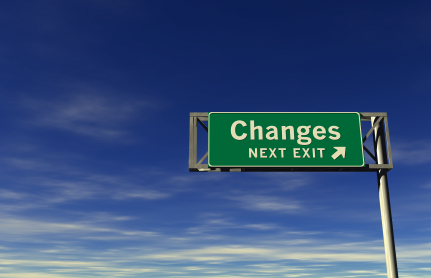 A few days ago, Johh F Moore, from Government in the Lab, asked me this question: “HOW CAN WE DRIVE CHANGE?“.
 (That's a big question, John!)
Interestingly, at the same time, I was having a discussion at Edgeryders with the French experimental philosopher Michel Fillippi. He answered more or less the same thing I told John, but he used different words, he used philosopher’s words.
My answer to John --- an intuition --- was to highlight people (for instance, Edgeryders participants), and have them emerge as leaders.
Michel Fillippi's answer is to have the most numerous leaders emerge, and he explained why.
Here is what Michel Filippi told me, via the following Edgeryders status, http://edgeryders.ppa.coe.int/statuses/552):
 (My translation) “We should seek for various possibilities, different leaderships. Why? The first reason behind (this method) is because it’s systemic. Every leader is to create a world, a system (as defined in the General Systems Theory). A system grows and becomes more unstable. Any system involves a becoming. Several competing systems allow individuals to engage in various futures and this prevents a system to seek its maximum state, therefore, prevents it to reach a maximum instability. Individuals must be taught not to seek unique solutions, not to aim to a state of perfection. We should also know that all creation, any system design, generates violence because a state of energy is being released, or the convening of power to make it work. Nothing is done in calmness, quietness. Therefore, (efforts should focus on) having the most numerous leaders emerge, while preventing one leader in particular from becoming dominant. (When in a process) of structuring, (it is preferable) to avoid convergence and develop even opposed themes. I think – as I have faith in philosophy -, that the debate on "Which people? Which kills, abilities, and so on?" "How the Real in which humans exist?", "What worlds are better?" What does everybody hate?" "What is a civilization?","What does 'being civilized' mean? ","For what, for whom, for what world are we willing to suffer, to die ", these are classics philosophical questions, but they are worth to be re-asked, and be explored again.“
Michel Fillippi continues:
“Yesterday, I visited an exhibition about Buckminster Fuller. There, I read a sentence in which I recognized myself, and I also recognized in it one of these blockages that you mentioned, Lyne, regarding the model. As the model is not externalized, it is not yet perceived as (being in the process) of building, therefore, the (implementing of) change is difficult. We must come to understand that our opinions, beliefs, desires, and perhaps even wishes that we consider to be the most real - a truth that comes from the core of being, the substance of our bodies, our essence itself -, are only constructions that we have absorbed without criticism, without us knowing it could become otherwise.
As for convergence, is a problem in innovation design. A trend of engineers and administrators is to converge as quickly as possible. It is a cognitive model that has been "swallowed" as truth, and indisputable as a procedure based on algorithms, mathematical. However, (it is better) at all costs, to converge as late as possible. Specifically, a design method such as C-K designed at by The School of Mines of Paris (Hatchuel), fight against convergence by using the mathematical notion of "forcing".”
In a few days, on January 9th, Edgeryders will launch its third campaign 'We the people'. One of the four missions of this campaign will focus on open government and open data. A discussion on leadership models and open government models will certainly be helpful to many of us. You are invited to participate to the Edgeryders new campaign, and in the meantime, you can also give a hand to John F Moore, by continuing the discussion on "How to drive change". http://edgeryders.ppa.coe.int/shine-some-light/mission_case/how-can-we-drive-change
30 novembre 2011
ALL HANDS ON DECK! Call to action: Edgeryders
 Do you know that on LinkedIn, some Francophones have a discussion about open government issues?
 There is no shadow of an open government to the horizon, but these issues are floating around in people's minds, and are discussed here and there.
What can we do now?
Yesterday, Thanh Xuan T. wrote:
(translation) "How the French government, and even the European governments, operate prevents the application of open government, and also the fear of losing a little more power (both legislative and executive) and overall control over the people. Democracy often goes backwards, or serves some obscure purposes, only to result in more control and censorship "discreetly" practiced by the government. Regarding the question of political will: it is obvious that this type of "management" far exceeds the ability of our political leaders, who more consistently care about maintaining their elected mandate, than have a genuine interest in citizens and their nation. Therefore, open government becomes a paradox: a rather unpopular democratic method, not welcomed by officials, even in the land of liberty (especially by the current ruling party)." (Ref. Is France to soon have an open government policy?Last week, at Edgeryders, it was discussed, with philosopher Michel Filippi, how to go about defining models of leadership and open government. I explained yesterday (see this post) that we covered risk aversion and locking processes.
Edgeryders is a bridge between government authorities and citizens: what a great opportunity to help them understand what are our concerns! Government officials are listening, via this platform. Let's speak up!
The time has come for citizens from European countries - and other nations - to mobilize in an unprecedented move. Students, open government apostles, culture hackers, worldview hitchhikers, open scholars, geeks, artists, scientists, philosophers, thought leaders, change agents, social alchemists, activists, advocates, communicators, lobbyists, writers, thinkers, visionaries, etc., people from all spheres of society, ALL HANDS ON DECK! Let's gather at Edgeryders!
1) Sign up on the platform http://edgeryders.ppa.coe.int/
2) Upload your (real) pic
3) Complete your profile
4) Do the 'Share your ryde' mission (TELL YOUR STORY. What matters to you? Do you care about open government? Why?)
Here are examples of cool stories: do you know the Kyopol system? (mission by pedro.prieto-martin); Michel Filippi's mission; Neal Gorenflo's mission; Lyne Robichaud's mission, including discussions with philosopher Michel Filippi.And soon, we'll start doing small packets of research together, we'll play Edgeryders missions and campaigns. Stay tuned.
29 novembre 2011
Des rêves de gouvernement ouvert qui ne s’éteignent pas (Edgeryders)
Il y a deux semaines, je me suis rendue à Strasbourg, en France, pour rencontrer les membres de l’équipe du nouveau projet Edgeryders, piloté par le Conseil de l’Europe, et financé conjointement par la Commission européenne. Je suis très heureuse et honorée de faire partie de cette équipe.
Je ne suis pas Européenne, mais ma vision s'étend à toute la Francophonie, et au-delà.
J'ai raconté mon histoire chez Edgeryders, puisque c’est à travers les yeux des citoyens que les instances gouvernementales européennes souhaitent découvrir ce qui tient à cœur aux jeunes (et les moins jeunes également), et à partir de ces informations, rechercher des solutions pour les aider à surmonter les difficultés (notamment en ce qui concerne l’emploi). C’est ainsi que devrait être un gouvernement ouvert: à l’écoute, démontrer un réel intérêt pour ce qui est proposé par les citoyens, et utiliser ces informations (cette création de connaissances) pour améliorer les politiques publiques.
Chez Edgeryders, j’ai parlé de mes rêves de gouvernement ouvert dans l’espace francophone, parce que c’est ce qui me préoccupe depuis plusieurs années, suffisamment pour avoir consacré beaucoup de mon temps et de mes énergies à tenter d’atteindre cet idéal. À ce jour, il n’existe pas encore de pays francophone à travers le monde, qui se soit véritablement doté d’une politique de gouvernement ouvert, et soit arrivé à appliquer les fondements de cette philosophie.
Ces rêves sont toujours vivants, bien que le projet Gouvernement ouvert et Francophonie que j’ai proposé, n’ait pas encore abouti. Lorsque quelque chose à l’intérieur nous anime avec autant d’intensité, rien, ni personne, ne peut l’anéantir. Même si des instances gouvernementales ont rejeté les idées que j’ai proposées, ces idées n’ont pas été détruites. Elles continuent d’exister, quelque part, en moi, et chez d’autres gens également.
J’ai partagé les détails d’un projet qui n’existe pas encore. Peut-être qu’il n’existera jamais. Il n’est pas encore de ce monde, mais il a gravité à l'intérieur de moi, et chez d’autres personnes, pendant toute une année.
Ces idées ne m’appartiennent pas, elles appartiennent à la communauté.
En partageant mon histoire chez Edgeryders, j’ai rencontré sur ma route un philosophe. Pas n’importe quel type: un philosophe expérimental. La semaine dernière, avec Michel Filippi, a pris forme une discussion à propos de modèles de leadership et de gouvernement ouvert. Ce genre de discussion n'a encore jamais eu lieu, et j'étais contente qu'elle prenne forme dans un endroit tel que Edgeryders.
Michel Filippi a lui aussi raconté son histoire. C’est ainsi que j’ai appris qu’il est doué pour créer des relations entre les choses et les personnes, pour «modéliser». Il m’a pointé un article de Karl Dubost, datant de 1999, intitulé «Proximité sémantique».
J’invite celles et ceux qui ont des rêves de gouvernement ouvert, tout comme moi, et aussi celles et ceux qui sont préoccupés par l’avenir de notre société, à partager votre histoire, et à vous joindre aux discussions et missions collectives, que nous tisserons ensemble au cours des prochains mois sur Edgeryders.
Je ne suis pas Européenne, mais ma vision s'étend à toute la Francophonie, et au-delà.
J'ai raconté mon histoire chez Edgeryders, puisque c’est à travers les yeux des citoyens que les instances gouvernementales européennes souhaitent découvrir ce qui tient à cœur aux jeunes (et les moins jeunes également), et à partir de ces informations, rechercher des solutions pour les aider à surmonter les difficultés (notamment en ce qui concerne l’emploi). C’est ainsi que devrait être un gouvernement ouvert: à l’écoute, démontrer un réel intérêt pour ce qui est proposé par les citoyens, et utiliser ces informations (cette création de connaissances) pour améliorer les politiques publiques.
Chez Edgeryders, j’ai parlé de mes rêves de gouvernement ouvert dans l’espace francophone, parce que c’est ce qui me préoccupe depuis plusieurs années, suffisamment pour avoir consacré beaucoup de mon temps et de mes énergies à tenter d’atteindre cet idéal. À ce jour, il n’existe pas encore de pays francophone à travers le monde, qui se soit véritablement doté d’une politique de gouvernement ouvert, et soit arrivé à appliquer les fondements de cette philosophie.
Ces rêves sont toujours vivants, bien que le projet Gouvernement ouvert et Francophonie que j’ai proposé, n’ait pas encore abouti. Lorsque quelque chose à l’intérieur nous anime avec autant d’intensité, rien, ni personne, ne peut l’anéantir. Même si des instances gouvernementales ont rejeté les idées que j’ai proposées, ces idées n’ont pas été détruites. Elles continuent d’exister, quelque part, en moi, et chez d’autres gens également.
J’ai partagé les détails d’un projet qui n’existe pas encore. Peut-être qu’il n’existera jamais. Il n’est pas encore de ce monde, mais il a gravité à l'intérieur de moi, et chez d’autres personnes, pendant toute une année.
Ces idées ne m’appartiennent pas, elles appartiennent à la communauté.
En partageant mon histoire chez Edgeryders, j’ai rencontré sur ma route un philosophe. Pas n’importe quel type: un philosophe expérimental. La semaine dernière, avec Michel Filippi, a pris forme une discussion à propos de modèles de leadership et de gouvernement ouvert. Ce genre de discussion n'a encore jamais eu lieu, et j'étais contente qu'elle prenne forme dans un endroit tel que Edgeryders.
Michel Filippi a lui aussi raconté son histoire. C’est ainsi que j’ai appris qu’il est doué pour créer des relations entre les choses et les personnes, pour «modéliser». Il m’a pointé un article de Karl Dubost, datant de 1999, intitulé «Proximité sémantique».
«Laisser émerger la forme de l'action, plutôt que de modéliser l'action sur la forme.»Cette phrase flotte dans mon esprit depuis quelques jours. Je me demandais comment j’allais orienter une mission collective sur Edgeryders, en lien avec les questions de gouvernement ouvert. Cette phrase arrive au bon moment, comme un cadeau. Merci beaucoup Michel Filippi.
J’invite celles et ceux qui ont des rêves de gouvernement ouvert, tout comme moi, et aussi celles et ceux qui sont préoccupés par l’avenir de notre société, à partager votre histoire, et à vous joindre aux discussions et missions collectives, que nous tisserons ensemble au cours des prochains mois sur Edgeryders.
S'abonner à :
Messages (Atom)


